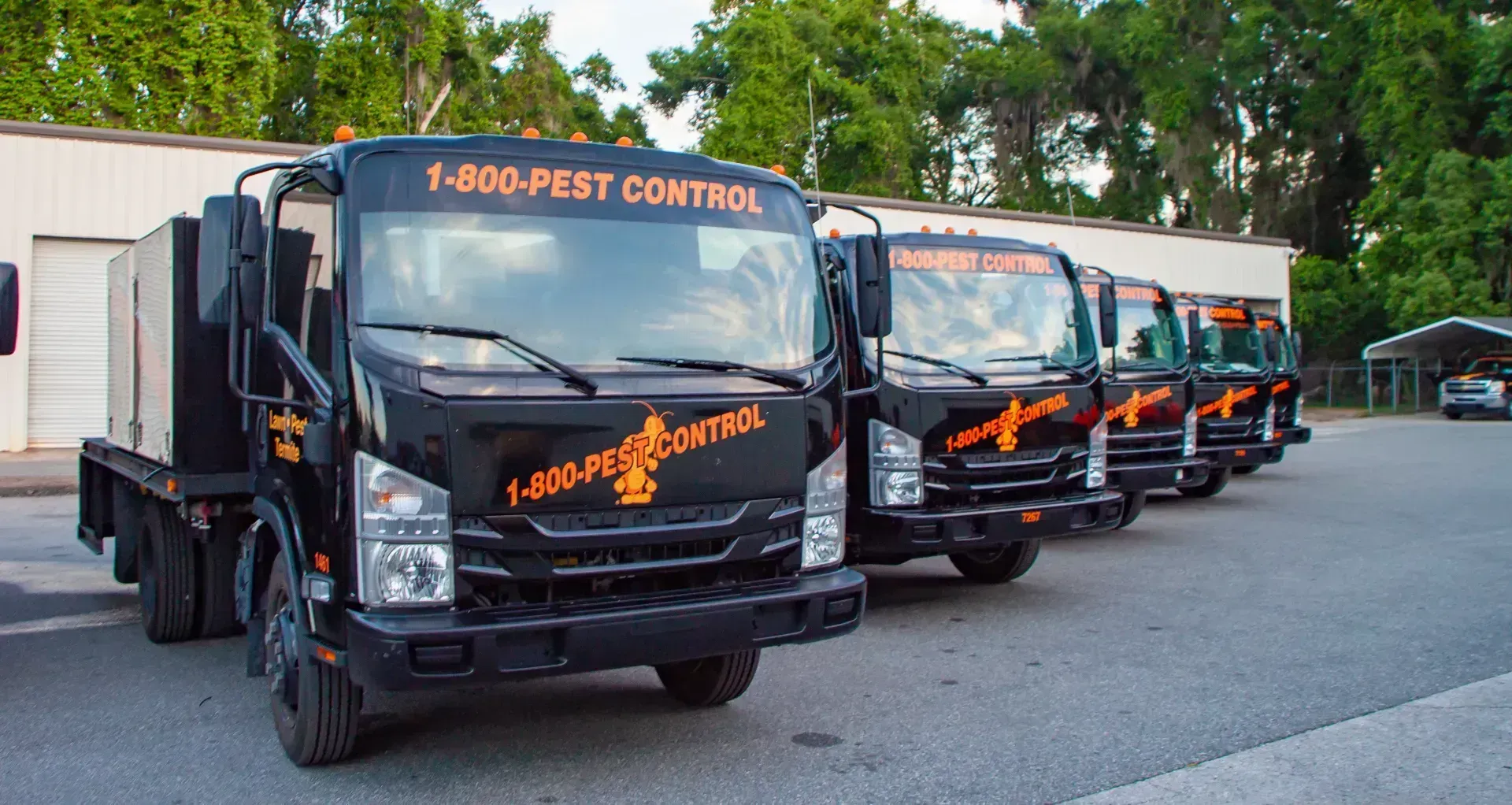
Typing “lawn care company near me” sounds like it should solve the problem in five minutes. In real life, it usually gives you a crowded list of companies that all promise green grass, clean edges, and easy service, right up until your yard still looks tired by late afternoon in a Florida heat wave. The right choice comes down to something much more practical: finding a company that fits your lawn, your property, your schedule, and the kinds of problems yards in Ocala, The Villages, Gainesville, and nearby areas actually deal with.
Why “lawn care company near me” can be harder than it sounds
At a glance, most lawn care companies look almost identical. You see a nice logo, a few photos of striped grass, maybe a handful of five-star reviews, and a list of services that sounds reassuringly broad. But lawns are not interchangeable, and neither are lawn care companies.
That matters more in North Central Florida than a lot of people realize. A small yard in a newer Gainesville neighborhood does not behave the same way as a larger property in Ocala with sandy patches and inconsistent irrigation. A neat-looking HOA entrance in The Villages has different needs than a rental property that only gets attention when something starts going wrong. Even two homes on the same street can have different issues if one gets full sun all day and the other sits under heavy tree cover.
The catch is that a company can be nearby and still be a bad fit. Close distance does not automatically mean strong local knowledge, dependable scheduling, or the right service mix. Some companies mainly mow. Some focus on fertilization and weed control. Some handle pest issues well but do not offer much follow-through on turf health. Some are fine for a quick cleanup but not for ongoing care.
That is why the smartest way to shop is not to start with “Who is closest?” It is to start with “What is my lawn actually struggling with, and who is equipped to fix that?”
What a lawn care company actually does
“Lawn care” gets used as a catch-all phrase, but it covers a wide range of work. Sometimes it means simple maintenance like mowing and edging. Sometimes it means a treatment program built to improve grass health over time. Sometimes it includes pest control, shrub care, irrigation checks, or seasonal cleanups.
Knowing the difference saves you from hiring the wrong kind of help.
A basic lawn maintenance company usually handles the visible routine work. That includes mowing, trimming, edging along driveways and sidewalks, blowing off hard surfaces, and maybe some seasonal cleanup. If your yard already looks healthy and you mostly want it kept tidy, that may be enough.
A fuller lawn care service goes deeper. That can include fertilization, weed control, pest treatment, disease management, soil-related recommendations, shrub and ornamental care, and ongoing monitoring. Instead of just cutting what is there, the goal is to improve the lawn itself.
For many properties, especially in Florida, the second category matters more than people expect. A lawn can be freshly mowed and still be unhealthy. Short grass with weeds, fungus, or insect damage is still a problem, just a neatly trimmed one.
Lawn maintenance vs. lawn treatment
Here’s the simplest way to separate the two: maintenance manages appearance, treatment manages lawn health.
Maintenance is the haircut. Treatment is the doctor’s visit.
If your grass looks thin, yellow, patchy, or overrun with weeds, mowing alone will not solve it. In some cases, mowing too short or on the wrong schedule can make it worse. A treatment-focused company looks at what is causing the decline. That may be poor nutrition, watering problems, fungal disease, insects, soil stress, or a combination of several issues.
This distinction trips people up all the time. You hire a mowing crew because the yard looks bad, expecting the grass to improve. A month later, the edges look sharp but the lawn itself still looks worn out. That is not necessarily bad service. It is just the wrong service for the problem.
If your yard already has a strong foundation, regular maintenance can keep it presentable. If the lawn is struggling, you need diagnosis and treatment, not just shorter grass.
When pest control and lawn care overlap
In Florida, lawn care and pest control often overlap more than expected. Some pests damage the lawn itself. Some create safety or comfort issues around the property. Some do both.
Chinch bugs are a classic example. These tiny insects feed on St. Augustine grass and can create dry-looking brown patches that get mistaken for drought stress. Grubs damage roots below the surface, which weakens turf and can lead to soft, thinning spots. Fire ants are a different kind of headache, especially on commercial properties, near walkways, playgrounds, mailboxes, or community common areas. Fleas and ticks matter around homes with pets and around multi-use outdoor areas where people spend time.
That is where service overlap becomes practical. A company that understands both lawn health and pest pressure can do a better job spotting the difference between weeds, disease, insects, and watering issues. For homes, that means fewer wrong turns and fewer wasted treatments. For businesses, rental properties, and HOA-managed spaces, it can also reduce liability and complaints.
Not every lawn care company handles pest issues, and not every pest company understands turf. If insects are part of the problem, make sure the company is set up for both sides of the job.
Start with your Yard’s biggest problem
Before you compare companies, compare your own needs. That sounds obvious, but it is easy to skip when you just want somebody to fix the yard.
The best lawn care company for you depends on what is going wrong right now. If the main issue is overgrown grass, you are shopping for something different than if the main issue is recurring weeds, insect damage, or a commercial property that needs consistent presentation every week.
Try to identify the most obvious pain point first. Not every detail, just the biggest one. That gives you a much better filter for estimates, service plans, and reviews.
If your grass looks thin, brown, or patchy
Thin or patchy grass can come from a surprising number of causes. Poor nutrition is one. Drought stress is another. So is overwatering. Add fungal disease, chinch bugs, compacted soil, bad mowing height, shade problems, and seasonal stress, and the picture gets messy fast.
That is why diagnosis matters so much.
Brown grass does not automatically mean the lawn needs more water. Patchy grass does not automatically mean insects. A company that jumps straight to a treatment without trying to identify the cause is basically guessing, and guesses get expensive. Good lawn care starts with reading the symptoms correctly. Where are the weak spots? Are the roots shallow? Is the damage spreading? Does it follow sprinkler patterns? Is the turf type reacting to heat, fungus, or feeding pressure?
For St. Augustine, Bermuda, and Zoysia lawns common in this region, the answer can vary a lot. St. Augustine often struggles with chinch bugs and fungal stress in humid conditions. Bermuda usually tolerates heat well but can thin out under shade or poor feeding. Zoysia can look great when healthy but may recover slowly if neglected.
If your lawn already looks stressed, the company you want is one that explains the likely cause in plain English and gives you a treatment plan with a timeline, not a vague promise to “green it up.”
If weeds keep coming back
Recurring weeds are almost never just a weed problem. They are usually a sign that the lawn has gaps, weakness, bad timing, or an inconsistent treatment plan.
Here’s the thing: weeds are opportunists. If the turf is thin, stressed, or underfed, weeds move in. If a company only sprays visible weeds after they appear, the yard can get stuck in a loop where it looks better for a few weeks and then slips right back.
That is why timing matters. Pre-emergent weed control aims to stop certain weeds before they sprout. Post-emergent treatment targets weeds that are already visible. Both can matter, and neither works well as a one-size-fits-all shortcut. A good program pairs weed control with stronger turf health, because thick grass naturally leaves less room for weeds to take over.
If dollar weed, spurge, crabgrass, or broadleaf weeds keep returning, look for a company that talks about prevention, lawn density, and follow-up, not just a quick spray.
If you need help for a business or HOA property
Commercial and managed properties have a different standard. The yard is not just your yard, it is part of how the property feels to tenants, customers, residents, and visitors. Clean entrances, healthy turf, trimmed edges, and predictable upkeep all shape first impressions.
Consistency matters more here than flashy claims. A business park, medical office, retail center, apartment community, or HOA entrance needs dependable scheduling, clear communication, and documentation when needed. If somebody misses a visit at a busy site, that is not just inconvenient. It becomes visible fast.
There is also more at stake. Slip hazards from overgrown edges, ant mounds near walkways, dead turf near entry points, and poor communication around service timing can all turn into complaints. For managed communities and commercial sites, it helps to work with a company that understands site access, low-disruption scheduling, liability concerns, and regular reporting.
The most important things to look for in a lawn care company
Once you know your main problem, the comparison gets easier. You are no longer judging lawn care companies by who has the nicest truck wrap. You are judging them by whether the service actually fits what your property needs.
A few factors matter far more than everything else.
Local experience with north central florida lawns
Local experience is not a bonus. It is one of the main things you are paying for.
Lawns in Ocala, Gainesville, and The Villages deal with intense heat, heavy summer rain, sandy or fast-draining soil, shifting pest pressure, and turf types that each behave differently. A company that understands these conditions can make better calls on treatment timing, mowing height, irrigation advice, and what is likely causing visible decline.
This is especially useful with common grasses in the area. St. Augustine is popular but can be vulnerable to chinch bugs and fungus. Bermuda handles traffic and sun well but does not love shade. Zoysia offers a dense, attractive look but may need more patience and careful maintenance to stay at its best.
A local company should be able to talk about those differences naturally, not like it is reading off a product sheet. If the explanation sounds generic enough to fit any state, that is a warning sign.
Licensed, insured, and properly trained
If a company is applying fertilizers, herbicides, insecticides, or disease treatments, credentials matter. You do not need a lecture full of state code numbers. You just need proof that the people treating your property are allowed to do that work and know how to handle it safely.
Licensing, in plain English, means permission and qualification to apply certain treatments legally. Insurance means that if something goes wrong on your property, there is protection in place. Training matters because lawn treatment is not just about spraying products. It is about correct identification, timing, rates, and safe handling around people, pets, buildings, and landscapes.
For commercial properties, this matters even more. You want a company that can operate professionally on active sites without cutting corners. Ask directly. A solid company will answer clearly.
Clear service plans
“Full lawn care” sounds nice until you realize it can mean almost anything.
Clarity prevents disappointment. It also makes estimates much easier to compare. One company may quote a lower monthly rate because it excludes follow-up treatments, pest work, or shrub care. Another may look more expensive but include those items from the start. Without a clear scope, you are not comparing prices. You are comparing mystery boxes.
Good communication and reliable scheduling
A lawn care company does not need to send a novel before every visit. But it should be easy to reach, clear about timing, and realistic about weather delays.
That matters because lawn care is recurring. If the company is hard to reach before you sign up, communication usually does not improve afterward. You want straightforward reminders, sensible scheduling, notice when rain shifts a route, and answers that make sense when you ask what is being done.
For busy homeowners, this often matters almost as much as the actual treatments. For businesses and managed properties, it can matter even more. Missed visits, unclear timing, and poor follow-through create friction fast.
Results you can actually verify
Promises are cheap. Lawn improvement is visible.
Look for proof you can check: reviews that mention specific outcomes, before-and-after photos, neighborhood references, and descriptions that sound realistic. Good companies do not promise perfect grass overnight because healthy lawns do not work that way. They explain what improvement should look like over time.
Pay attention to patterns in reviews. Are customers mentioning better communication, fewer weeds, healthier turf, reliable visits, and thoughtful follow-up? Or are the comments vague and repetitive? Real quality tends to show up in practical details.
Services worth comparing before you hire
Quotes can be confusing because two companies may use similar words for very different service levels. The easiest way to avoid that is to compare by category. What exactly is being done, how often, and with what level of follow-through?
Mowing, edging, and cleanup
This is the visible baseline service most people think of first. Standard maintenance usually includes mowing, edging along sidewalks and driveways, trimming around obstacles, and blowing grass clippings off paved areas.
But “standard” still varies. Some companies mow weekly during the growing season and shift to a different schedule when growth slows. Others offer biweekly service to save money, which can work for some properties but can also leave the lawn looking rough during fast-growth periods. In Florida, weekly service is often the safer choice in peak growth months, especially if you care about appearance.
Ask what happens if rain interrupts the route, whether clipping cleanup is included, and how fence lines, gates, and hard-to-reach areas are handled.
Fertilization and weed control
This is where long-term lawn health usually starts. Fertilization helps feed the turf, while weed control reduces competition. Done well, these services work together. Done poorly, you get a lawn that is temporarily green but still weak and weed-prone.
A good company should explain treatment timing by season, what types of weeds are common on your property, and whether the program includes both prevention and active control. Ask about follow-up too. Some companies include spot treatments or retreatments if weeds break through. Others charge extra each time.
Simple explanation, no jargon: pre-emergent aims to stop some weeds before they appear, post-emergent targets weeds that are already growing. If a company cannot explain which approach fits your lawn and when, that is worth noticing.
Insect and disease control
Florida lawns can look bad for reasons that have nothing to do with fertilizer. Insects and disease often mimic drought or nutrient issues, which is why diagnosis matters so much here.
A better provider does not just apply a generic insect treatment and move on. The company should look at symptoms, confirm what is likely happening, and explain how progress will be monitored. Some lawn problems need retreatment, some need time, and some need changes in irrigation or mowing to fully improve.
The same goes for disease pressure. Fungus in humid weather can spread quickly under the right conditions. If the lawn shows circular dead spots, discoloration, or spreading patches, the plan should address both treatment and the conditions feeding the problem.
Shrub, tree, and ornamental care
Many properties need more than turf service. Landscape beds, shrubs, and smaller ornamental trees can suffer from insects, nutrient issues, and disease too. If those areas are part of your curb appeal, bundled care can make life much easier.
There is also a practical benefit. One company handling turf and ornamentals can sometimes spot patterns faster, especially if irrigation or pest pressure is affecting multiple parts of the landscape. It can also save time on scheduling and simplify billing.
Not every property needs this added service, but if your front beds are just as visible as the lawn, it is worth comparing.
Irrigation checks and watering guidance
Even the best lawn treatment program can flop if the watering is off. Too little water stresses the turf. Too much water can invite disease, waste money, and weaken roots. Uneven sprinkler coverage creates strange-looking problems that get misread as pest or fertilizer issues.
Some lawn care companies do not touch irrigation at all. Others will at least point out obvious sprinkler problems or give basic watering guidance. That is useful, because a healthy lawn is part treatment plan and part irrigation discipline.
You do not necessarily need a company that repairs every sprinkler head. But you do want one that notices when the system is working against the lawn.
Questions to ask before signing up
A short phone call or estimate visit can tell you a lot if you ask the right things. You are not trying to grill anybody. You are trying to see whether the answers are specific, clear, and connected to your actual lawn.
What’s Included in the price?
This should never feel fuzzy.
Clear answers now save ugly surprises later.
How will you handle my specific lawn problems?
This question separates tailored service from canned sales talk. If you mention brown patches, recurring weeds, chinch bug concerns, fire ants, or a struggling commercial entrance, the answer should address that problem directly.
Listen for specifics. A strong answer sounds like a plan. A weak answer sounds like a slogan.
Do you offer one-time service or ongoing plans?
Some issues can be handled with a one-time visit. Others cannot.
A cleanup, a single ant treatment, or a one-off mowing service might be enough in the right situation. But recurring weeds, chronic pest pressure, poor turf health, and seasonal lawn decline usually need ongoing care. Grass does not build lasting health from one treatment any more than skipping one gym visit ruins your fitness. It is the pattern that matters.
A good company should explain the tradeoff honestly. Quick fixes are sometimes appropriate. They are not the answer to everything.
What happens if the lawn Doesn’t improve?
This is one of the best questions you can ask because it gets past the sales pitch.
Does the company offer follow-up visits? How is progress evaluated? What timeline is realistic? What happens if the first treatment does not solve the issue? Honest companies do not promise instant transformation. They explain what success looks like, what could slow it down, and how adjustments are handled.
If the answer is basically “trust the process” with no detail behind it, keep looking.
Red flags that should make you keep looking
A few warning signs show up again and again with weak providers. Spot them early and you save yourself a lot of frustration.
A company should want some kind of real information before naming a price. That might mean an on-site look, photos, property details, or at least a conversation about your lawn’s condition and goals.
If somebody throws out a number without asking much of anything, that usually means one of two things: the quote is padded to cover uncertainty, or it is unrealistically low and likely to change later. Neither is great.
Vague answers and pushy sales tactics
Pushy same-day pressure is another bad sign. Lawn care is not a used car lot. A good company should be able to explain the service clearly enough that you feel informed, not cornered.
No local references or inconsistent reviews
One or two bad reviews happen in any service business. What matters is the pattern. Missed visits, billing confusion, poor communication, weak results, or complaints that sound weirdly similar should make you pause.
Local references help too. If a company works in your area regularly, there should be some kind of track record nearby, especially in places like Ocala, Gainesville, and The Villages where neighborhood reputation tends to travel.
Long contracts with little flexibility
Some ongoing service plans make sense on a contract. Recurring treatment programs often work best over time, and a written agreement can clarify expectations.
The problem is not the existence of a contract. It is a contract that gives you almost no way out if service drops. Check cancellation terms, auto-renewal language, minimum commitments, and what happens if your property needs change. A fair agreement should protect both sides, not trap you.
Choosing the right company for your situation
There is no single best lawn care company for every property. The best fit depends on what you care about most right now.
Best fit for busy homeowners
If your main goal is simple, reliable upkeep without a lot of back-and-forth, prioritize consistency and convenience. Look for easy scheduling, clear reminders, bundled services, and a company that communicates without making you chase updates.
This is a good situation for recurring maintenance paired with basic treatment services, especially if you want the yard handled without thinking about it every week.
Best fit for lawn recovery
If the grass is already struggling, diagnosis matters more than convenience slogans. Look for a company that inspects carefully, explains likely causes, offers a treatment plan with follow-up, and sets a realistic timeline for improvement.
Recovery work is not glamorous, but it is where good lawn care really shows. You want substance here, not polish.
Best fit for commercial properties
For offices, retail sites, rental communities, and HOA-managed spaces, dependability wins. Prioritize liability coverage, professional communication, documented service, predictable scheduling, and a clean, consistent appearance across the property.
You also want a company that can work around active site use without creating disruption.
Best fit for budget-conscious properties
If budget is tight, start with the services that protect the lawn from sliding backward. That usually means reliable mowing, basic weed control, and treatment for any active pest or disease issue that is clearly causing decline.
You can always add more later. The trick is not to cut so much that the lawn’s foundation falls apart and becomes more expensive to fix.
Why local conditions matter in ocala, the villages, and gainesville
Florida lawn care has its own rhythm, and North Central Florida has a very specific version of it. A yard can look decent at 9 a.m. and stressed by 4 p.m. after a hot, bright day, especially if the turf is already weak or the irrigation is uneven.
That local reality affects everything from mowing schedules to weed prevention timing.
Heat, rain, and sandy soil
Heat speeds growth, but it also raises stress. Heavy rain can help for a while, then wash timing off balance or create fungal conditions. Sandy soil drains quickly, which means nutrients and moisture may not stick around as long as you expect.
This combination makes lawn care feel a little like trying to keep a towel folded on a windy beach. If the timing is off, the yard slips fast. A good company adjusts for that with smarter scheduling, better treatment timing, and practical watering guidance.
Common florida lawn pests and problems
Several lawn headaches show up often in this region. Chinch bugs damage turf by feeding on grass blades and stems, especially in St. Augustine. Dollar weed is a persistent broadleaf weed that thrives in moist conditions and often points to watering issues. Fungal pressure increases during warm, humid stretches, especially where airflow is poor or irrigation is excessive.
Seasonal weed bursts are another familiar issue. A lawn can look fine for months, then suddenly fill with unwanted growth if prevention timing was missed or the turf thinned out. These are not rare edge cases. They are part of normal Florida lawn reality.
Seasonal timing for better results
Good lawn care is not one-and-done because lawns change with the season. Fertilization, weed prevention, insect control, mowing patterns, and watering habits all work better when timed to local growth and stress cycles.
That is why the right company should be thinking ahead, not just reacting to what is visible today. Prevention often looks boring in the moment, but it is usually what keeps a lawn from falling apart later.
How to compare lawn care companies side by side
After all this, the actual comparison process can be simple. You do not need fifteen estimates and a spreadsheet that takes over your weekend. You need a short list and a fair way to compare what each company is really offering.
Build a shortlist of 3 local companies
Three is usually enough. Start with companies that serve your exact area, offer the kind of service you actually need, and show signs of local experience. Proximity helps with scheduling, but service match matters more.
Use review quality to narrow the list, not just review quantity. Ten useful reviews that mention real outcomes are more helpful than fifty vague compliments.
Put the estimates side by side and look at the actual scope. How often are visits scheduled? What treatments are included? Is follow-up built in? Are shrubs, pests, or irrigation checks part of the plan? Is the quote for maintenance, treatment, or both?
This is where a slightly higher quote often starts making more sense. Once you line up the details, apples-to-apples comparison gets much easier.
Try one small step before committing long term
If possible, start with an inspection, first treatment, or trial service before locking into a longer commitment. That gives you a chance to see how the company communicates, shows up, explains the work, and handles your property.
Try that one small step first. A good lawn care company will make the next decision easier, because the service will already feel clear, steady, and worth continuing.
- Disclaimer: This article is for general informational purposes only. It is not professional advice, a quote, or a service agreement. Conditions at your home or property may differ; contact a qualified professional for an on-site evaluation before making repair, safety, or spending decisions.